
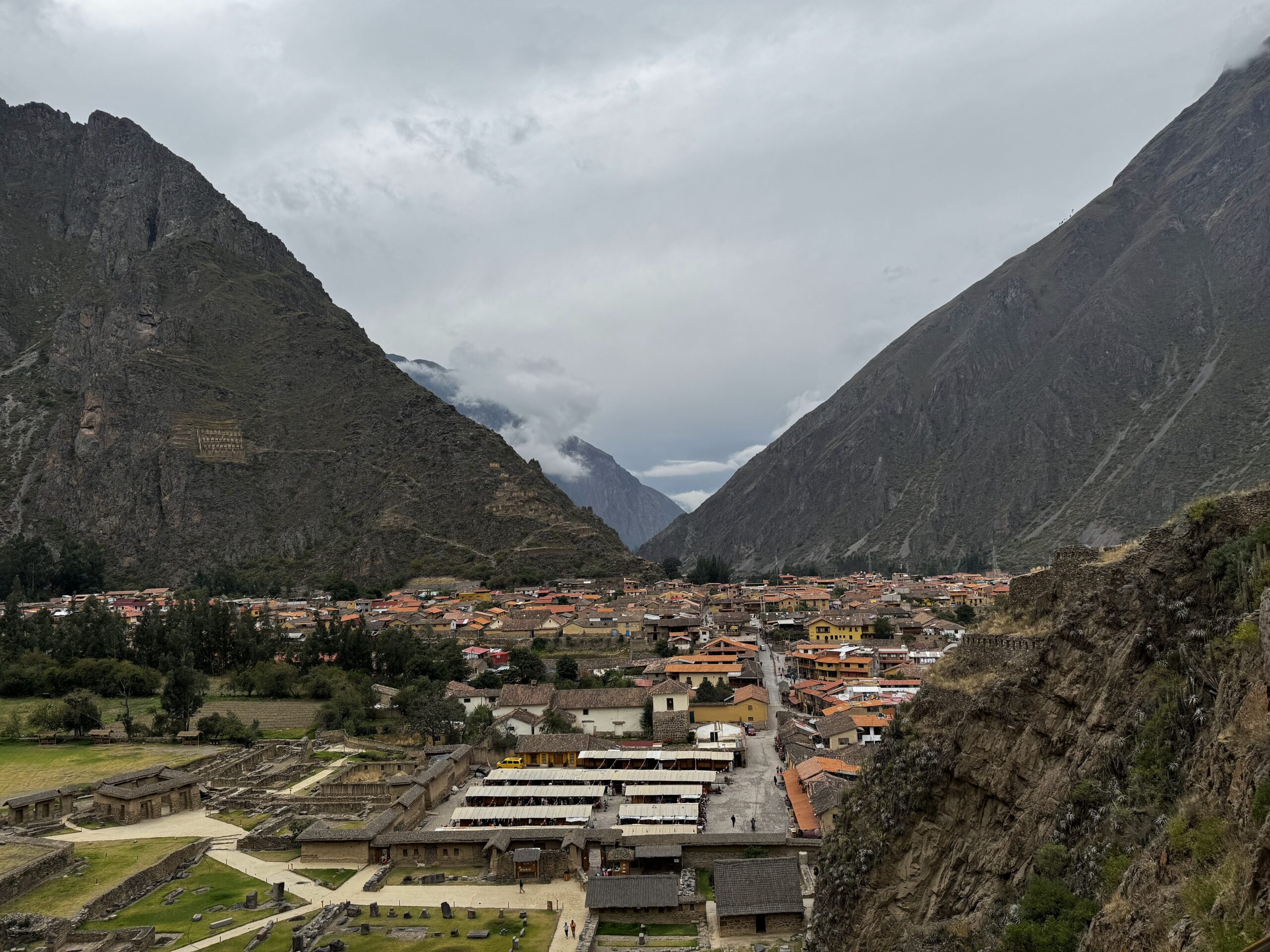
We Went to Peru for Machu Picchu, but Fell in Love with Ollantaytambo
I love written travel blogs – they have a way of introducing you to places and experiences that leave some room for our imagination and have us looking forward to really experiencing it ourselves as well. More often than not, these blogs help uncover some treasured experiences that usual viral itineraries miss.
I want to share one such ancient fortress town that I read about in a blog – a place that travellers either completely miss or rush through, while visiting Peru.
Stepping into a 15th century living Inca town
Between Cusco and Aguas Calientes (the base town for Machu Picchu) sits Ollantaytambo – a living Inca town that is so well preserved that it would still look familiar to anyone who lived here six centuries ago. It still has the same ancient stone alleys, large stones lined by houses, the same waterways, and massive terraced fortresses guarding the valley just as they did in the 15th century.
It is the only pre-Columbian urban plan that is still functioning as a real, lived-in neighbourhood. I wonder how many such places exist in the world today that haven’t been completely paved over into modern cities.
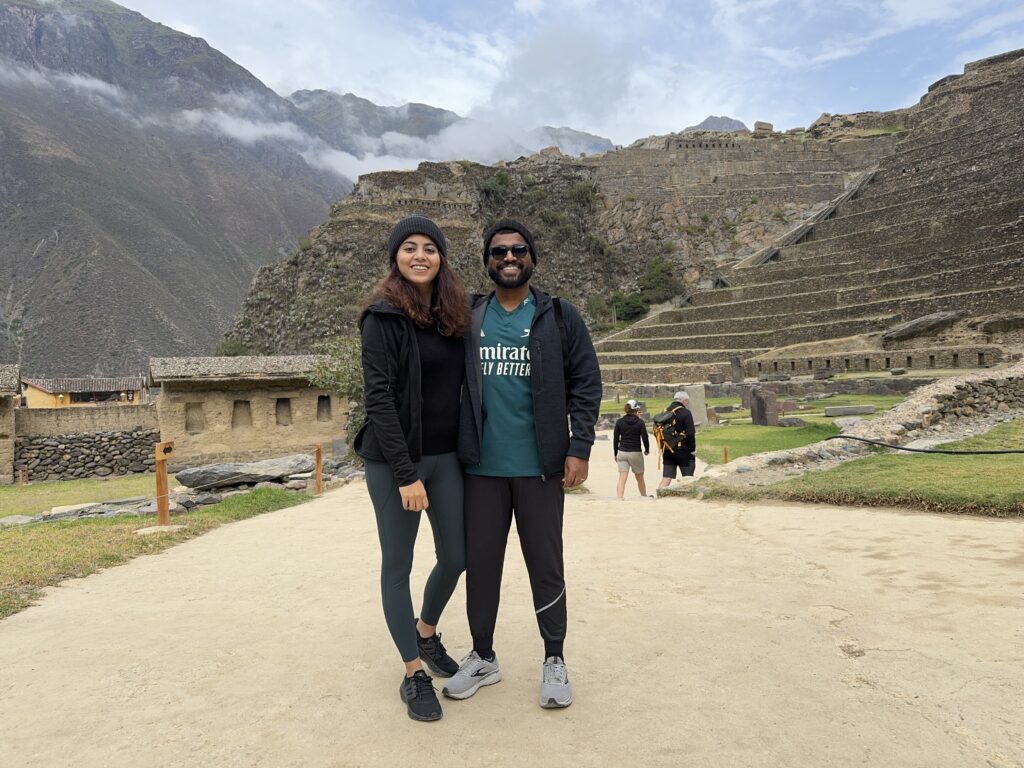
This town was our first destination in Peru, just a couple of hours drive from Cusco. I clearly remember the feeling when we got off the cab in Ollantaytambo – it felt like stepping into a town I only thought could be seen in a period drama on TV.
Ancient stone walls lined either side of the narrow lane, a stream of water running along the base of each wall, a couple of people interacting with the kids in Quechua, their local language.
Staying at a local lodge in the Sacred Valley
We checked into this beautiful lodge run by a couple – Edith and Stijn. They were such welcoming hosts and their story even more heartwarming. Edith was so excited to meet us and found it hard to believe that we travelled all this way from India to their town. She had met Indian origin people from the US before, but never Indians travelling all the way from India.
Edith who is from Peru and Stijn from Belgium, fell in love during university in Europe but did not want to live a big city life, so they decided to move to Ollantaytambo, build a life here, and run this homestay living a slow, intentional life amidst nature.
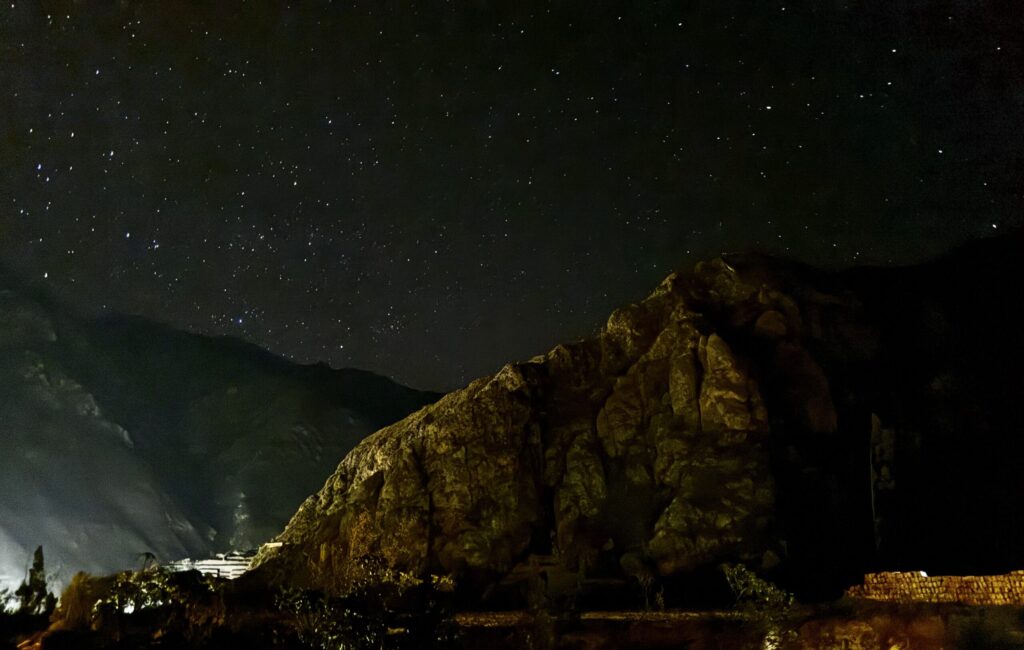
Their lodge was next to a river stream, and surrounded by mountains and skies so clear that we spent our nights star gazing – everywhere we looked we could see mountains, trees, and the clear skies all in one frame, and the calming sound of the river in the background – a sensory memory that will always stay with me.
Ancient engineering and the Ollantaytambo fortress
What struck me most as we walked the old streets was not just the sheer scale, but the intricacies of engineering dating back centuries. Every building in the original Inca quarter sits on a foundation of perfectly interlocked stone, cut so precisely that five centuries of earthquakes have not loosened a single block. The doorways have a deliberate structural design where they narrow as they rise, which makes each entrance stronger. The water channels alongside every lane still carry snowmelt from the mountain peaks above, just as they always have.
Across the river, the great terraces of the fortress rise in seventeen steps up the mountainside. These weren’t just basic farming platforms; they were an ingenious system built to create different temperatures on each level, allowing crops to grow at altitudes where they normally wouldn’t survive. Standing at the base of those terraces, looking up, and then walking up to look at the entire town from the top – it felt like standing inside proof that an ancient civilisation got so many things right, and that those systems simply never stopped working.
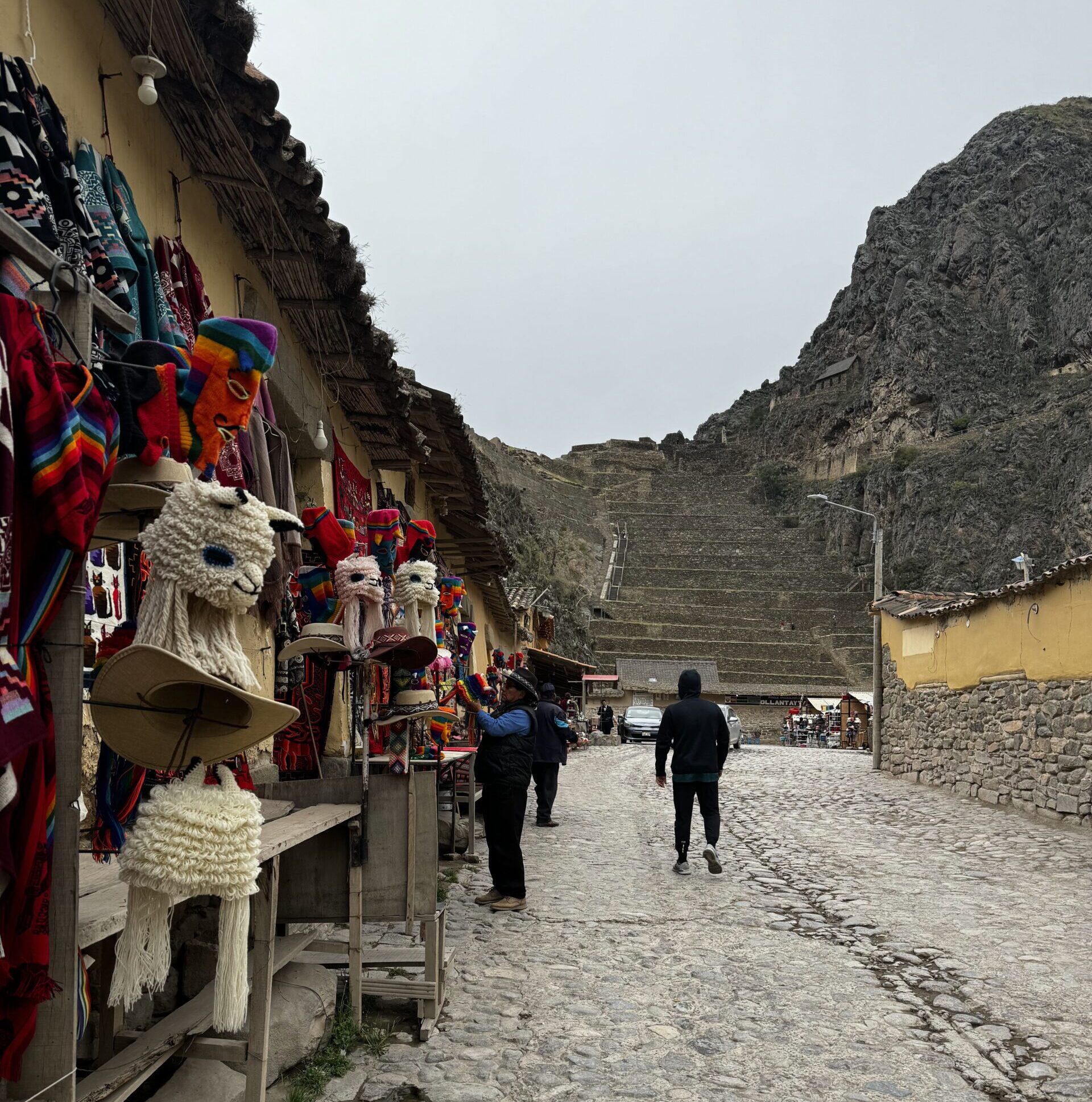
The centre of the town – Plaza de Armas – is unlike the big central plazas that you would expect, but it is the perfect place to sit on a bench and observe daily life and enjoy good food in the cozy cafes and bars on all four sides of the complex. And when you look up you see the dramatic views of the Ollantaytambo fortress on one side and the huge cliffs of Pinkuylluna on the other.
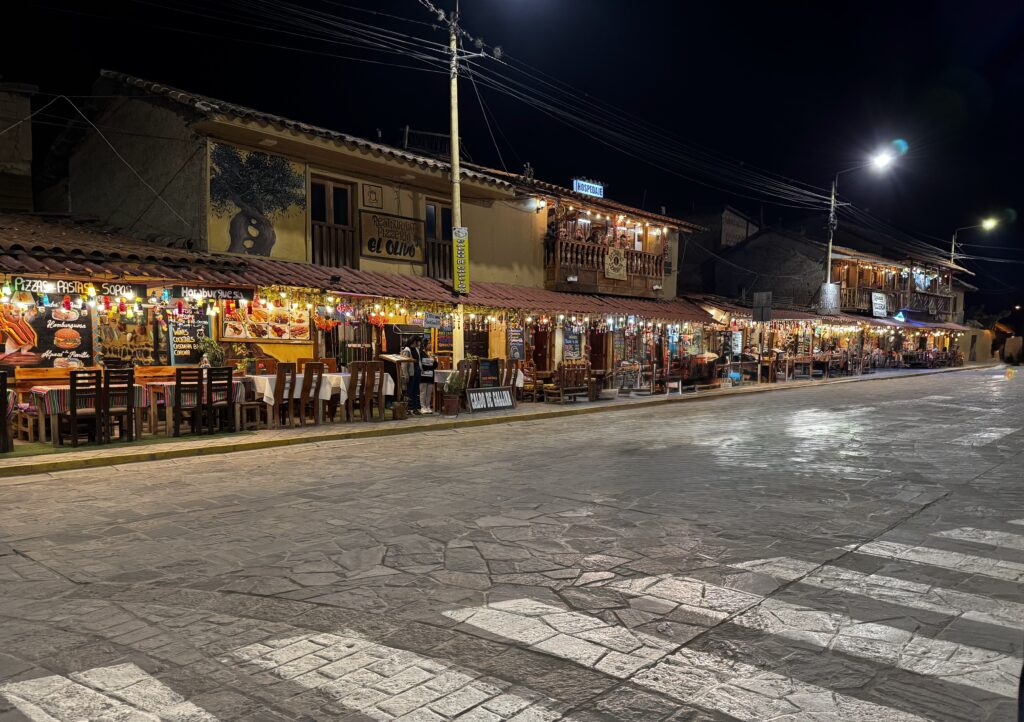
Why you should spend more than one day in Ollantaytambo
Ollantaytambo is a small town that carries so much art and history in every street. We spent a couple of days here – walking around this unique town, interacting with the locals, learning about the living culture of the Quechua, visiting the fortress and the sun temple, and spending time in the art galleries. We bought a couple of paintings as a memory from this part of the world.
We visited this town as a base for our Machu Picchu visit, but this place became the real highlight of our trip—so much so that we ended up extending our stay even with a packed itinerary. Spending time in Ollantaytambo felt like a dream, one that I didn’t even know I was looking for.